
What Does a Trustee Do?
The Role of a Trustee of a Revocable Living Trust in Ohio
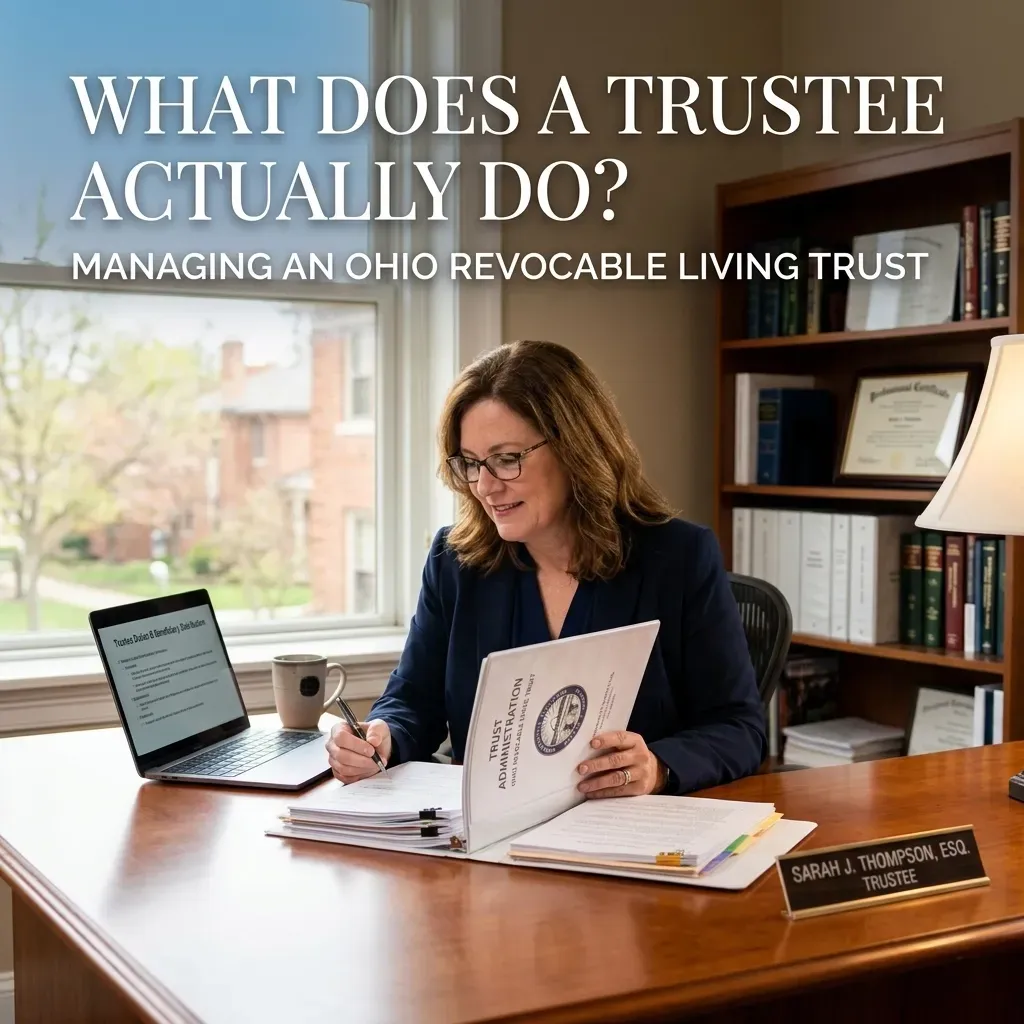
If you have been asked to serve as a trustee, or if you are currently sitting at your kitchen table wondering who you should name for your own trust, take a deep breath. It is a big job, but it is also an important service you can perform for your family or friends.
At the Law Offices of Laura Blumenstiel, we see a lot of people who are initially overwhelmed by the "legalese" of trust documents. They worry about the liability, the paperwork, and whether they will "mess it up." The truth is, while the role of a trustee in Ohio comes with significant responsibilities, it is also a structured process. My goal is to break that process down into plain English so you can feel confident in your role.
The Heart of the Role: What is a Trustee?
In the simplest terms, a trustee is the person who holds legal title to the assets in a trust for the benefit of someone else (the beneficiaries). Think of the trust document as a "rulebook" written by the person who created the trust (the Grantor or Settlor). The trustee is the referee and the coach rolled into one, making sure the rules are followed and the team (the beneficiaries) is taken care of.
In Ohio, a trustee is a fiduciary. That is a legal term that essentially means you are held to the highest standard of honesty and loyalty. You aren't just managing money; you are managing a legacy. You must act in the best interests of the beneficiaries at all times, even if that means setting aside your own personal opinions or interests.
The Three Phases of an Ohio Revocable Living Trust
A revocable living trust is unique because it changes throughout the life of the person who created it. Because of this, the role of the trustee changes depending on what is happening in the Grantor's life.
Phase 1: The Grantor is Healthy
Most of the time, when you set up a revocable living trust in Ohio, you are the initial trustee. You have total control. You can buy and sell property, move money around, and change the trust whenever you want. During this phase, the trustee’s duties are owed exclusively to the Grantor. It’s business as usual.
Phase 2: Incapacity
This is where the "Successor Trustee" steps in. If the Grantor becomes ill or is unable to manage their own affairs due to dementia or another condition, the successor trustee takes the wheel. Their job is to use the trust assets to pay the Grantor’s bills, manage their healthcare costs, and ensure they are comfortable. This avoids the need for a messy, public guardianship proceeding in an Ohio probate court.
Phase 3: After the Grantor Passes Away
Once the Grantor passes away, the trust becomes "irrevocable." The successor trustee now has the job of "winding down" the trust. This involves paying final debts, filing tax returns, and eventually distributing the remaining assets to the beneficiaries as outlined in the trust document. This is often where the most work happens, but it is also where the trust provides the most value by avoiding the probate administration process.
Key Responsibilities of an Ohio Trustee
Whether you are managing a trust during a period of incapacity or after someone has passed, the core duties remain largely the same.
1. Asset Management and Record-Keeping
A trustee must take "possession" of the assets. This doesn't mean moving them into your personal bank account (never do that), but it does mean ensuring the accounts are properly titled in the name of the trust.
You are responsible for:
- Managing all assets in the trust.
- Making distributions to the beneficiaries, as instructed in the trust.
- Keeping meticulous records. In Ohio, you must keep adequate records of administration. This means every penny in and every penny out needs to be documented.
2. Communication with Beneficiaries
One of the biggest reasons for family disputes is a lack of communication. Ohio law actually requires trustees to keep beneficiaries informed. You must provide them with information about the trust's assets, income, and expenses. If a beneficiary asks for a copy of the trust or a report on how the money is being spent, you generally have a legal obligation to provide it. Transparency is your best friend when it comes to avoiding conflict.
3. Filing Taxes and Paying Expenses
The IRS still wants its share. The successor trustee is responsible for obtaining a tax identification number for the trust (if necessary) and filing the appropriate state and federal tax returns. You also use trust funds to pay for administrative expenses, this includes things like insurance premiums, property taxes, and even legal fees if you need to consult with an trust attorney.
4. Prudent Investment
You can’t just let a large sum of money sit in a 0% interest checking account for years, nor can you bet it all on a "hot" new crypto-currency. Ohio trustees are bound by the "Prudent Investor Rule." This means you must invest and manage trust assets as a prudent person would, considering the purposes, terms, and distribution requirements of the trust. It’s about balancing reasonable growth with minimal risk.
The Compassionate Side of Being a Trustee
While we talk a lot about the legal "must-dos," there is a human element to this that is just as important. Often, a trustee is a sibling, a child, or a close friend of the person who passed. You are grieving, too.
Being a trustee means you are the gatekeeper of a loved one's final wishes. Sometimes that means saying "no" to a beneficiary who wants their inheritance early. Sometimes it means being the one to sort through a house full of memories to prepare it for sale. It is a role that requires patience, empathy, and a thick skin.
Common Pitfalls to Avoid
Even the best-intentioned trustees can run into trouble. Here are the most common mistakes we see:
- Comingling Funds: Never mix trust money with your personal money. Ever.
- Self-Dealing: You cannot use trust assets to benefit yourself (e.g., selling a trust-owned car to yourself for $1) unless the trust explicitly allows it.
- Ignoring the "Rulebook": If the trust says to distribute assets "per stirpes" and you don't know what that means, ask! We actually have a great guide on what per stirpes means to help you out.
- Procrastination: Failing to file taxes or notify beneficiaries can lead to personal liability. In Ohio, a court can remove a trustee and order them to repay losses if they fail to perform their duties.
Do You Need a Lawyer to Be a Trustee?
Technically, no. But practically? It is almost always a good idea. The cost of hiring an attorney to guide you through the administration process is usually paid for by the trust assets, not your own pocket. Having a professional by your side ensures that you are following the Ohio Trust Code to the letter, which protects you from personal liability.
Whether you are looking to protect your assets for the future or you’ve recently found yourself in the driver’s seat as a successor trustee, we can help. Managing a trust is a significant responsibility, but you don't have to do it alone. If you have questions about your role as a trustee in Ohio or want to start your own estate planning journey, please feel free to reach out to us. We’re here to help you navigate the legalities so you can focus on what really matters: your family and your legacy.