
Blog

And Why It Might Be Right for You

Letting the State Decide Who Inherits is a Bad Bet
You have just lost someone you love. Along with grieving, you are now trying to handle practical responsibilities because the will names you as executor. You bring the will to the bank, expecting the process to be straightforward. Instead, the representative looks at the document and says, “We need your letters.” What letters? They are talking about your L etters of Authority, the official probate court documents showing that you have been legally appointed to act for the estate. Think of them as your executor’s “badge of authority.” The will may nominate you, but the letters are what prove the court has given you the legal power to manage estate property. What Are Letters of Authority? Letters of Authority are court-issued documents that identify the person legally authorized to administer a deceased person’s estate. That person is called a fiduciary . Depending on the circumstances, the fiduciary may be: An executor , who is appointed when there is a valid will; or An administrator , who is appointed when there is no will or when the named executor cannot serve. In Ohio, the probate court uses the official Form 4.5, "Entry Appointing Fiduciary; Letter of Authority " to document the appointment and issue the fiduciary’s authority. The form is more than a piece of paperwork. It is evidence that the court has reviewed the estate-opening documents, determined who should serve, and authorized that person to take appropriate action for the estate. How Do You Get Letters of Authority in Ohio? The process usually begins in the probate court for the Ohio county where the decedent lived at the time of death. If the decedent lived in Delaware County, for example, the estate would generally be opened through the Delaware County Probate Court. The exact filing requirements can vary by county, but the typical process includes the following steps. 1. File the Appropriate Probate Documents If there is a will, the original will generally must be submitted along with an Application to Probate Will , which is Ohio Supreme Court Form 2.0. You will also typically file Form 4.0: Application for Authority to Administer Estate . This application asks the court to open the estate and appoint the executor or administrator. The application generally includes information about: The decedent; The proposed fiduciary; The surviving spouse and next of kin; Beneficiaries named in the will; The estimated value of the estate; and Whether a bond may be required. Other documents may be necessary, but please know that local probate courts usually require additional, local documents. 2. The Court Reviews the Application The probate court reviews the will, if there is one, and determines whether the proposed fiduciary is eligible and suitable to serve. The court may also determine whether: Notices or waivers are required; A hearing is necessary; A bond must be posted; or Additional information is needed before the appointment can be completed. 3. You Accept the Duties Before receiving authority, the proposed executor or administrator generally must file an acceptance of the fiduciary duties. This is an important step because serving as fiduciary creates legal responsibilities to the estate and its beneficiaries. 4. The Court Issues Form 4.5 Once the court approves the appointment and all required steps are completed, it issues Form 4.5: Entry Appointing Fiduciary; Letter of Authority . That is the document you take to banks, financial institutions, title companies, government agencies, and others who need proof of your authority. When Will You Receive Your Letters? Letters of authority are not always issued immediately when a loved one dies or even immediately when you find the will. Typically, the court must first: Receive the required application; Admit the will to probate, if applicable; Review the proposed appointment; Receive your acceptance of duties; and Address any bond or notice requirements. Depending on the county, the court’s schedule, and whether the paperwork is complete, letters may be issued within several days or may take a few weeks. A missing document, an address problem, a required hearing, or disagreement among family members can add time. If you need access to an account urgently, ask the probate court or your attorney what steps are available. Do not assume that having the original will gives you the same authority as having court-issued letters. Why Do Letters of Authority Matter? Most financial and legal institutions will not rely on the will alone. Banks and brokerages typically require letters before allowing you to: Open an estate account; Access or close the decedent’s accounts; Transfer investments; Obtain financial records; or Deposit estate funds. Title companies and county offices may also require letters before allowing you to take action involving real estate. Insurance companies, government agencies, and other organizations may request them as well. As a practical matter, you generally cannot bind the estate, sell estate property, distribute assets, or pay ordinary estate obligations simply because you are named as executor. Your authority begins when the probate court issues the letters. There are limited circumstances where immediate action may be appropriate, such as arranging funeral expenses or taking reasonable steps to preserve estate property. For example, securing a vacant home, preventing damage, or protecting valuable property may be necessary. These limited steps are not the same as full estate administration, and you should be careful not to go beyond what is necessary before your appointment is complete. Practical Tip: Request Certified Copies When the probate court issues your letters, ask how to obtain multiple certified copies . You may need separate copies for: Each bank or brokerage; A retirement plan administrator; An insurance company; A title company; A government agency; or A creditor or other institution handling estate property. Many institutions also want letters dated within the last 30 to 60 days. This is not a universal rule, but it is common enough that you should ask each organization about its requirements before requesting documents. Having several certified copies can prevent delays and reduce the need to return to the probate court for additional paperwork. Remember: Letters Come With Responsibilities Letters of authority give you power, but they also create fiduciary duties. As executor or administrator, you may be responsible for: Identifying and safeguarding estate assets; Preparing an inventory; Providing required notices to creditors; Paying valid debts and expenses in the proper order; Keeping accurate records; Avoiding conflicts of interest and self-dealing; Treating beneficiaries fairly under the law; Filing required tax documents; and Preparing and filing an accounting when required. You cannot treat estate property as if it belongs to you personally. Even if you are the only beneficiary, you must follow the proper process and keep estate funds separate from your own money. If you are unsure whether an asset belongs to the estate, whether a bill should be paid, or whether you can sell or distribute property, pause before acting. A decision made too quickly can create personal liability or cause problems with beneficiaries later. We Can Help You Understand the Next Step Serving as an executor or administrator can feel overwhelming, especially while you are grieving. Letters of authority are an important first step, but they are only one part of the probate process. At the Law Offices of Laura Blumenstiel , we help families throughout Ohio understand their responsibilities and move through probate with greater clarity and confidence. We offer both virtual and in-person meetings, and payment plans may be available. If you need help opening an estate, obtaining letters of authority, managing estate property, or completing the probate process, contact our office to schedule a consultation. This article provides general information about Ohio probate law and is not legal advice. Probate requirements can vary depending on the county and the facts of the estate. For advice about your specific situation, consult a qualified Ohio probate attorney.
After a loved one passes away, families are often focused on grieving, making funeral arrangements, and handling the immediate responsibilities that follow. Then, sometimes weeks, months or even years later, a letter arrives - Ohio wants to be repaid for Medicaid benefits. This can feel frightening, especially when the family home is involved. Ohio’s Medicaid Estate Recovery Program, often called MER, allows the state to seek repayment for certain Medicaid benefits paid during a person’s lifetime. But the state does not automatically “take the house” simply because someone received Medicaid. Whether Ohio can recover, what assets may be affected, and whether an exception applies depends on the individual’s circumstances and the way the assets were owned. Here is what Ohio families need to know. What Is Medicaid Estate Recovery? Medicaid Estate Recovery is the process Ohio uses to seek repayment from the estate of certain Medicaid recipients after death. Under Ohio Revised Code Section 5162.21 , Ohio generally seeks recovery in two situations: The recipient was permanently institutionalized in a nursing facility or another qualifying institution, regardless of age; or The recipient was age 55 or older when Medicaid benefits were received. Recovery may include payments for nursing home care, other covered Medicaid services, and managed care capitation payments. Capitation payments are the monthly payments Medicaid makes to a managed care organization on the recipient’s behalf. Importantly, those payments may be included even if the recipient used fewer services than the amount Medicaid paid to the managed care plan. This means the amount claimed may be larger than a family expects. Does Ohio Automatically Take the House? No. Ohio does not automatically take every house owned by a Medicaid recipient. Instead, the Ohio Attorney General’s Office may present a claim against the estate. If the estate has assets available to pay the claim, those assets may be used to satisfy it. If the home is the primary significant asset, the family may need to determine whether it can be retained, sold, or protected under an exception or hardship waiver. The executor or administrator of the estate has important notice and administration responsibilities. In general, the person handling the estate must notify the appropriate Ohio authorities, and the Attorney General’s Office may then submit a Medicaid estate recovery claim. This is why it is important not to ignore a letter from the Ohio Attorney General’s Medicaid Estate Recovery Unit. The letter may contain deadlines that affect the family’s rights. What Counts as the “Estate” in Ohio? This is the part that surprises many families. For ordinary probate purposes, people often think of an estate as the property that passes under a will through probate. But Ohio’s Medicaid estate recovery definition is broader. Under Ohio law, the estate can include: Probate assets; Real estate owned individually; Personal property; Property passing through joint tenancy Property passing through TOD or POD designations; Property passing under a survivorship deed; A retained life estate; Assets held in a living trust; and Other property in which the Medicaid recipient had a legal title or interest at death. In other words, simply avoiding probate does not necessarily avoid Medicaid estate recovery in Ohio . A survivorship deed, transfer arrangement, or revocable living trust may help with probate administration in some situations, but those tools are not automatically Medicaid asset-protection strategies. Ohio’s expanded definition of “estate” can reach certain non-probate assets, including the family home. We explain more about the difference between probate and non-probate property in our article, The Probate Puzzle: What Counts as a Probate Asset? When Is the Home Protected? Ohio law provides important protections in certain family situations. Recovery is generally delayed or prohibited while any of the following qualifying individuals is alive: A surviving spouse Ohio generally cannot pursue estate recovery while the Medicaid recipient’s surviving spouse is alive. This protection is especially important when the home is jointly occupied or the surviving spouse depends on the property for housing. A child under age 21 Recovery may also be prohibited while the recipient has a child under age 21. A blind or disabled child A child who meets the applicable definition of blindness or disability may provide protection at any age. A sibling living in the home For certain claims involving the recipient’s home, recovery may be delayed while a sibling lawfully resides there. A child who provided care A child may also qualify for protection if the child: Provided care that delayed the parent’s institutionalization; Lived in the home for at least two years immediately before institutionalization; and Continued living there afterward. These exceptions are fact-specific. Families should gather documentation showing residence, caregiving, timing, and the recipient’s medical or institutional history. What Is an Undue Hardship Waiver? Ohio provides a process for requesting an undue hardship waiver. A waiver may reduce or eliminate recovery if enforcing the claim would create a serious financial hardship for an heir or another person with an interest in the estate. Examples may include situations where: The estate asset is the heir’s sole source of income; Recovery would force the heir to rely on public assistance; Recovery would deprive the heir of necessary food, shelter, or clothing; The heir is financially dependent on the estate and is elderly or permanently disabled; or The heir made substantial financial contributions to the Medicaid recipient or the property. A reduced inheritance or a desire to receive more of the estate is generally not enough by itself. Ohio evaluates hardship requests on a case-by-case basis. Watch the 30-day deadline The hardship waiver deadline is critical. Under Ohio Administrative Code Rule 5160:1-2-07 , a request generally must be made within 30 calendar days after the Attorney General’s claim notice is mailed . That clock may begin on the mailing date shown on the notice, not the date you happen to open the letter. If you receive a claim notice: Keep the envelope and all pages of the notice. Note the mailing date. Read the instructions carefully. Gather documents supporting the hardship. Submit the request in writing and retain proof that it was timely sent. Consider speaking with an Ohio elder law attorney promptly. The Ohio Department of Medicaid generally has 60 days to decide a hardship request. If the request is denied or only partially granted, an appeal may be available, but additional deadlines apply. Planning Before Medicaid Is Needed The best time to consider estate recovery is before a crisis occurs. A properly designed Medicaid Asset Protection Trust, or MAPT, may help protect certain assets from future long-term-care expenses and estate recovery. However, these trusts must be created and funded correctly. They are not last-minute documents, and they can involve significant restrictions on control and access. The Medicaid rules include a five-year lookback period for many uncompensated transfers made before applying for long-term-care Medicaid. Transfers during that period may result in a Medicaid eligibility penalty. That does not mean every transfer is automatically wrong. It does mean timing and structure matter. A MAPT generally needs to be established and funded early enough for the planning strategy to work as intended. Other planning tools may include: Properly structured funeral or burial expense trusts; Thoughtful gifting strategies; Durable financial powers of attorney; Long-term-care planning; Reviewing beneficiary designations; and Coordinating the ownership of real estate and other assets. A funeral expense trust may be treated differently from an ordinary gift when it is structured to comply with Ohio Medicaid rules. It should be reviewed carefully rather than created through an informal arrangement. Why “Just Transfer the Deed” Can Backfire When a family learns that Medicaid estate recovery may affect a home, the first reaction is often, “Can we transfer the deed now?” A last-minute deed transfer can create more problems than it solves. Depending on the circumstances, it may: Create a Medicaid transfer penalty; Trigger questions about fair market value; Affect the recipient’s eligibility; Create tax consequences, particularly with respect to capitol gains; Cause loss of control over the property; Create gift or creditor concerns; or Fail to accomplish the intended protection. Intentional transfers made to avoid Medicaid recovery can also prevent an heir from qualifying for an undue hardship waiver. This is why do-it-yourself Medicaid planning and emergency deed transfers are risky. The right strategy depends on the recipient’s health, marital status, family structure, assets, income, home ownership, and timing. What Should Your Family Do If a Claim Arrives? If you receive an Ohio Medicaid estate recovery letter, do not assume the claim is automatically correct, or automatically avoidable. Start by reviewing: The recipient’s date of birth; Whether the recipient was permanently institutionalized; The dates and types of Medicaid benefits received; How the home and other property were titled; Whether a surviving spouse or protected child is involved; Whether a sibling or caregiving child exception applies; and Whether an undue hardship waiver may be available. You may also request information about the amounts included in the claim. Keep copies of everything you send and receive. At the Law Offices of Laura Blumenstiel , we help Ohio families understand how Medicaid planning, trusts, real estate, and estate recovery fit together. We offer virtual and in-person meetings, and payment plans may be available. You can contact our office to discuss your situation. Planning early can give your family more options. If a claim has already arrived, acting promptly may help you preserve the options that remain. This article is for general educational purposes only and is not legal advice. Medicaid eligibility and estate recovery rules are detailed, fact-specific, and subject to change. Do not rely on this article as a substitute for advice from a qualified Ohio elder law or estate planning attorney.

Why Handwritten Changes Can Wreck Your Ohio Estate Plan

Why You're Never Too Young to Have a Will
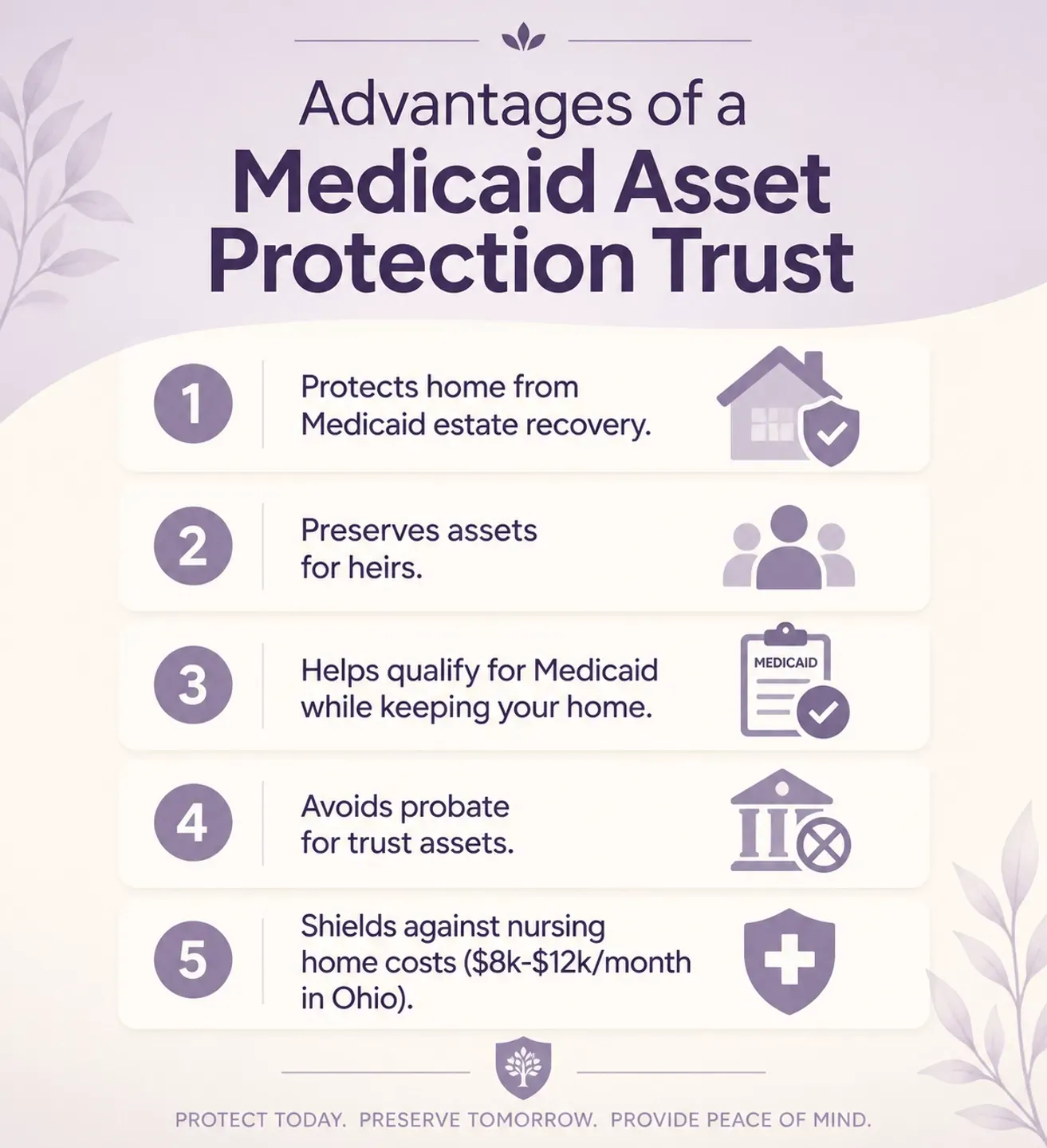
Thinking about the future shouldn’t feel like a weight on your shoulders, but we know those "what ifs" regarding long-term care costs can keep you up at night. In Ohio, nursing home costs can easily reach $12,000 a month, which is a staggering number for any family to face. That’s where a Medicaid Asset Protection Trust (MAPT) comes in. Think of it as a protective shield for the life you’ve built. It’s a specific type of trust designed to help you qualify for Medicaid assistance while ensuring your home and savings stay exactly where they belong: with your family. By planning ahead, you can protect your house from Medicaid Estate Recovery (when Medicaid demands repayment) and make sure your heirs receive their inheritance. It’s not just about the numbers; it’s about dignity, independence, and making sure your hard work benefits the people you love most. We specialize in helping Ohio families navigate these complex waters so you can breathe a little easier. If you've been wondering how to protect your legacy and stay in control of your future, we’re here to help you walk through the options. #EstatePlanning #MedicaidPlanning #OhioLawyer #AssetProtection #LongTermCare

Choosing a nursing home for a loved one is one of the most emotional and stressful decisions a family can face. Whether you’re looking for a place for a parent whose care needs have become too much to handle at home, or you’re navigating a sudden discharge from a hospital in Columbus or Cleveland, the weight of the decision can feel overwhelming. At the Law Offices of Laura Blumenstiel , we walk beside Ohio families every day as they navigate the complexities of elder law and Medicaid planning . We know that you want more than just a facility; you want a home where your loved one will be treated with dignity, kindness, and professional care. To help you cut through the marketing brochures and get to the heart of what matters, we’ve put together this ultimate checklist. Print it out, take it with you on your tours, and don’t be afraid to ask the tough questions. 1. Are you Medicaid certified? This is the "deal-breaker" question. Not all long term care facilities are certified for long-term Medicaid . If your loved one eventually runs out of private funds, they may need to transition to Medicaid. If the facility isn't certified, they might be forced to move to a different home entirely. You want to know upfront if they can stay in the same room, or at least the same building, once their payment source switches to Medicaid. 2. Do you have a Private Pay Requirement? There is a growing trend in Ohio for nursing homes to require a private pay period of up to two years before they will accept Medicaid payments. This is because they earn more from private pay patients than they do from Medicaid reimbursements. 3. What are your actual staffing ratios (including nights and weekends)? Facilities often give you a general number, but you want specifics. Ask how many State Tested Nursing Assistants (STNAs) and Registered Nurses (RNs) are on the floor during the "quiet hours." A facility might look great at 2:00 PM on a Tuesday, but the care quality can dip significantly at 2:00 AM on a Sunday. High staffing ratios are the single best indicator of resident safety and happiness. 4. Can I see your most recent state inspection report and star rating? In Ohio, nursing homes are regularly inspected by the Department of Health. They are required by law to have their most recent survey report available for the public to see. Don't just look at the overall Medicare star rating ; look for recurring citations related to "quality of care" or "resident rights." If you see a history of "actual harm" citations, that’s a major red flag. 5. How do you handle "Resident Rights" and autonomy? A nursing home shouldn't feel like a prison. Ask specifically about autonomy: Can my mom choose what time she wakes up? Can my dad choose his own clothes? Are they allowed to refuse a bath if they aren't feeling up to it that day? The best facilities prioritize the resident's schedule over the staff’s schedule. 6. What does the food really look like? Nutrition is vital, but so is the joy of eating. Ask if residents have choices at every meal. Better yet, try to visit during lunch. Does the food look appetizing? Is the dining room a social, happy place, or is it quiet and clinical? Also, ask if they can accommodate special diets (like low-sodium, vegetarian or diabetic-friendly) without the food becoming bland and repetitive. 7. What is the staff turnover rate? High turnover is a sign of a stressed work environment, which often leads to inconsistent care. If the staff is happy and stays long-term, they get to know the residents' quirks, preferences, and early signs of medical issues. If the facility is constantly relying on "agency" (temporary) staff, your loved one may never have a consistent caregiver. 8. How do you handle specialized care needs (like Dementia)? If your loved one has Alzheimer's or another form of dementia, ask about their memory care programming. Is the staff specifically trained in "behavior management" without the use of chemical restraints (sedatives)? Look for a facility that offers meaningful engagement for memory care residents, rather than just keeping them in a secure wing. 9. What activities happen on the weekends and evenings? Many homes have a robust schedule from 9-5, Monday through Friday, but "go dark" on the weekends. Ask for a copy of last month’s activity calendar. Are there outings? Live music? Religious services? Social isolation is a major health risk for seniors, so a vibrant social life is non-negotiable. 10. What is your "Bed-Hold" policy? If your loved one has to go to the hospital for a few days, does the nursing home hold their bed? In Ohio, Medicaid has specific rules about bed-holds, and private-pay residents may have different requirements. You don't want to find out after a three-day hospital stay that your loved one’s room has been given away to someone else. The Legal Side: Planning for the Transition Finding the right home is only half the battle. The other half is figuring out how to pay for it without losing everything you’ve worked for. Ohio nursing home costs can exceed $10,000 per month. Without proper asset protection and Medicaid planning , a family’s life savings can disappear in a matter of months. At the Law Offices of Laura Blumenstiel , we specialize in helping Ohio families protect their homes and legacies. Whether you are planning years in advance or you are in the middle of a "crisis" move, we can help you: Navigate the Ohio Medicaid "spend-down" process. Protect the family home for a spouse or children. Ensure your loved one gets the care they need without going broke. We’re Here to Help If you’re feeling overwhelmed by the paperwork or the "what-ifs" of long-term care, reach out. We offer a compassionate, warm environment (virtually or in-person) where we can talk through your unique situation. Don't wait until the crisis hits. Contact us today to start your plan.
Why Ohio Executors and Administrators Need to Wait for the Green Light

If you’ve already sat down and signed a Power of Attorney (POA), give yourself a pat on the back. You’ve taken a huge step toward protecting your family and your future. Most people think that once they’ve signed that "standard" document, they’re 100% covered. They assume their chosen agent - the person they trust most - will be able to step in and handle everything if they can no longer do it themselves. But here’s the thing, in the world of Ohio estate planning , a "standard" Power of Attorney can sometimes fall short right when you need it most. We see it often. A family comes to us in a crisis because a loved one needs long-term care, but the Power of Attorney they signed years ago doesn't give them the authority to do the specific planning required to protect the family home or qualify for Medicaid. This is because of something called "Hot Powers." In Ohio, these aren't just extra features; they are specific legal authorities that do not exist unless you specifically grant them. Today, let’s talk about why these "Hot Powers" are the secret sauce of a truly effective financial plan. The Ohio Uniform Power of Attorney Act: The "Opt-In" Rule Back in 2012, Ohio adopted the Uniform Power of Attorney Act (UPOAA). This was a good thing: it brought consistency and better protections to the state. However, it also created a very important distinction. Under Oh io law (specifically R.C. 1337.42), there is a list of high-risk powers that are considered so significant that a general "my agent can do anything I can do" clause isn't enough. These powers are "opt-in" only. If you don’t specifically initial them or include the exact legal language for them, your agent’s hands are tied. In the legal world, we call these "Hot Powers." They are "hot" because they allow an agent to fundamentally change your estate plan, move your money, or alter who gets your assets after you're gone. While that sounds a bit scary, for families navigating elder law issues or long-term care, these powers are often the only way to avoid financial disaster. 1. Gifting Powers: The Key to Medicaid Planning The most common "Hot Power" we talk about is the power to make gifts. In a standard POA, your agent might only be allowed to make very small gifts (like traditional holiday or birthday checks) or perhaps no gifts at all. Why does this matter? Because Medicaid planning often involves transferring assets to protect them. Imagine this: a husband needs to move into a nursing home. To qualify for Medicaid while ensuring his wife can stay in their home and keep enough of their savings to live on, the family needs to transfer certain assets into her name. If the husband is no longer mentally capable of signing those deeds or transfer documents, his agent steps in. But if the POA doesn't have the specific "Hot Power" to make gifts or transfers, the agent can't move the house or the savings. The family is stuck, and those assets might have to be spent down to $2,000 before Medicaid will help. By adding expanded gifting powers, you give your family the tools they need to protect what you’ve worked a lifetime to build. 2. Trust Powers: Creating a Safety Net Another critical "Hot Power" is the authority to create, fund, or amend a trust. You might already know about the benefits of a Medicaid Asset Protection Trust (MAPT) , but what if you don't have one yet and need one? Also, in Ohio, if you need to qualify for Medicaid but your income is just a little bit too high, you might need something called a "Miller Trust" (or a Qualified Income Trust). Without the specific power to create a trust in your POA, your agent might not be able to set this up for you. Giving your agent the power to move assets into a trust or create a trust on your behalf ensures that even if you can’t make the decisions yourself, your agent can implement asset protection strategies that keep your legacy intact. 3. Changing Beneficiary Designations Most of us have life insurance, IRAs, or 401(k)s. These accounts usually pass to "beneficiaries" when we die, skipping the probate process. But life changes. Maybe a beneficiary passes away before you do, or maybe a beneficiary develops a disability and receiving a large lump sum of cash would disqualify them from their own much-needed government benefits. Changing a beneficiary is a "Hot Power." If your agent doesn't have this specific authority, they can't update your accounts to reflect your current family situation. This can lead to assets going to the wrong person or causing legal headaches for your heirs down the road. 4. Avoiding the "Guardianship Trap" This is perhaps the biggest reason to expand your POA. If you become incapacitated and your Power of Attorney is "too weak", meaning it lacks the Hot Powers needed to handle your specific situation, your family's only option might be to go to Probate Court. They would have to ask a judge to appoint a "Guardian" for you. It’s expensive: You’ll pay for lawyers, court fees, and often an investigator. It’s public: Your private financial and medical business becomes a matter of public record. It’s slow: In a Medicaid crisis, every month of delay can cost $10,000 or more in nursing home fees. It’s restrictive: A guardian often has to ask the court for permission for every single major financial move. By taking the time to create a comprehensive, expanded POA now, you are essentially "vetoing" the need for a court-ordered guardianship later. You are keeping the power in the hands of the people you trust, not a judge who doesn't know your family. Is Your Current POA Enough? If you're a caregiver or someone looking at your own documents, here are a few things to look for: Does it mention trusts or gifts? Look for language specifically authorizing the agent to "create, amend, revoke, or terminate an inter vivos trust" or to "make a gift." If it mentions the power to gift, see if that power is restricted to specific types of gifts. If so, that probably doesn't help you. How old is it? If your POA was signed before 2012, it's definitely worth a professional review to ensure it complies with current Ohio law. A Word of Caution The hot powers demand a lot of trust in your agent, which is why they are not automatically included. They will have an incredible amount of control under this type of document, so you need to know that they will honor their responsibilities to use this power only to benefit YOU, not to change your plan so that they inherit more than you intended. Have a frank discussion with your attorney before deciding to grant these expansive powers. We’re Here t o Help You Get It Right At the Law Offices of Laura Blumenstiel, we don't just hand you a form and point to the signature line. We're a firm that prioritizes education. We want you to understand why you’re initialing a certain box and how that choice protects your spouse or your kids ten years from now. Whether you want to meet virtually or in-person, we make the process simple. We even offer expedited services and payment plans because we know that sometimes, these realizations happen in the middle of a family crisis and you need help now. Don't leave your family's hands tied. Let's make sure your Power of Attorney is as strong as it needs to be.